By Peterson Micheni | Counselling Psychologist | Pragma Counsellors
How to Stop Anxiety at Night!?It’s 2:47am.
You are lying in the dark, completely exhausted. Your body is ready for sleep. Your eyes are heavy. Everything is quiet.
But your brain has other plans.
It has decided that right now at 2:47 in the morning is the perfect time to replay that embarrassing thing you said four years ago. To calculate whether you can afford next month’s rent. To build a detailed disaster scenario around a work email you sent at 3pm. To remind you of every unresolved conversation, every uncertain outcome, every worst-case possibility currently available in your mental filing cabinet.
You tell yourself to stop thinking. That makes it worse. You check your phone terrible idea, but you do it anyway. Now it’s 3:24am and you have read seventeen tweets and your brain is somehow even louder.
I know this experience because my clients describe it to me every single week. And I know it personally that summer I was going through business failure , there were three consecutive months where I genuinely could not remember what it felt like to fall asleep without my heart racing first.
Nighttime anxiety is one of the most searched mental health topics in the world and one of the most misunderstood. This article is going to tell you exactly what is happening in your brain, why the usual advice makes it worse, and what actually works.
Table of Contents
- Why Anxiety Gets Worse at Night — The Science in Plain English
- 5 Types of Nighttime Anxiety (Which One Is Yours?)
- What Makes It Worse — Stop Doing These Things Tonight
- 7 Things That Actually Help Nighttime Anxiety
- The Real Talk: What Doesn’t Work No Matter How Many Pinterest Boards Say It Does
- When Nighttime Anxiety Is a Sign of Something More Serious
- Books and Tools That My Clients Actually Use
- FAQ
Why Anxiety Gets Worse at Night — The Science in Plain English {#why night}
Here is the thing that surprises most people: your anxiety does not actually get worse at night. Your ability to distract yourself from it disappears.
During the day, you have a hundred things competing for your attention. Work. Conversations. Traffic. Deadlines. Your brain is occupied. The anxious thoughts are still there they have been running quietly in the background all day but they cannot get through the noise.
Then you lie down in a dark, quiet room with nothing to do and nowhere to be. And suddenly those thoughts are the loudest thing in the room.
This is called the default mode network the part of your brain that activates when you stop focusing on external tasks and your mind turns inward. For people with anxiety, the default mode network is essentially a worry generator. Research published in the Journal of Neuroscience shows that the default mode network is significantly more active in people with anxiety disorders, and that its activity correlates directly with rumination the repetitive, circular thinking that makes nighttime so miserable.
There is also a cortisol factor. Cortisol is your primary stress hormone, and its natural cycle means it starts rising in the early morning hours often from around 3am to prepare your body to wake up. For people with anxiety, this natural cortisol rise can trigger an early morning stress response that pulls them out of sleep and into a spiral of worry before dawn.
Understanding this is important because it means nighttime anxiety is not a character flaw. It is not weakness. It is your nervous system doing something predictable and biological and once you understand that, you can work with it instead of fighting it.
If you are in a toxic relationship or a high conflict situation at home, your nighttime anxiety will almost certainly be worse. A nervous system that is under chronic threat during the day does not simply switch off at bedtime.
5 Types of Nighttime Anxiety — Which One Is Yours? {#types}
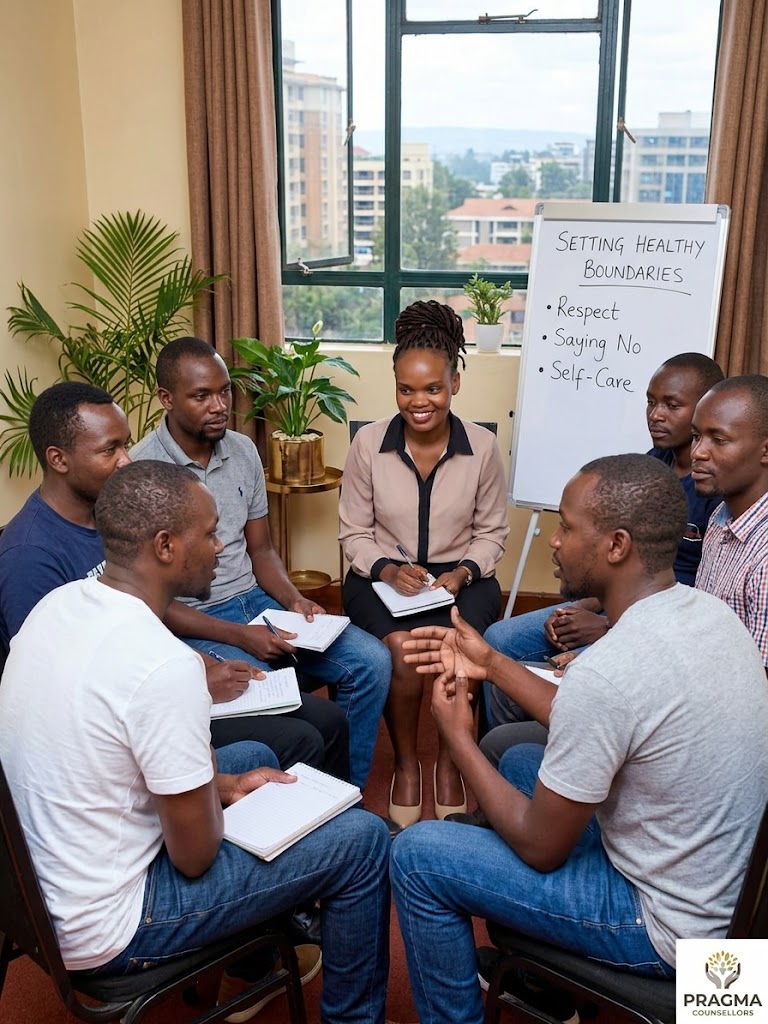
Not all nighttime anxiety is the same. In my practice I see five distinct patterns, and identifying yours matters because the solution is different for each one.
Type 1 — The Worrier. Racing thoughts about real-life problems. Money, relationships, health, work, the future. These are thoughts about things that could actually happen which makes them feel more legitimate and harder to dismiss.
Type 2 — The Ruminator. Replaying past events. Conversations that went wrong. Mistakes you made. Things you wish you had said differently. The past is fixed and cannot be changed which is precisely what makes this type so exhausting and so pointless, and yet so impossible to stop.
Type 3 — The Catastrophiser. Taking a small, real concern and extrapolating it into a worst-case disaster scenario with a kind of terrible creative energy. “I feel a headache coming on” becomes a brain tumour within four mental steps.
Type 4 — The Body Scanner. Lying awake noticing every physical sensation and attaching anxiety to it. Heart beating too fast. Breathing feels shallow. Is that chest tightness? What does that mean? The more you scan, the more you find, and the more anxious you become.
Type 5 — The 3am Waker. Falls asleep fine but wakes at 3 or 4am with a sudden jolt of anxiety or dread often with no specific thought attached. Just a feeling of wrongness. This pattern is strongly linked to the cortisol spike I described above, and also to depression early morning waking is one of depression’s most reliable physical symptoms.
Most people are a combination. But if you can identify your dominant pattern, you can target it specifically.
What Makes It Worse — Stop Doing These Things Tonight {#worse}
Before I tell you what helps, I need to tell you what to stop doing because half of the standard advice about sleep and anxiety actively makes things worse for anxious people.
Checking your phone. I know. You know. Everyone knows. And yet. The blue light suppresses melatonin. The content news, social media, emails activates your threat-detection system. And the habit of checking it trains your brain to associate bed with stimulation rather than rest. I tell every single client: phone out of the bedroom entirely. Not face-down on the nightstand. Out.
Trying to force yourself to stop thinking. This is called thought suppression and it is one of the most comprehensively disproven strategies in psychology. The famous white bear experiment showed that telling yourself not to think about something makes you think about it more. Fighting your thoughts does not quieten them. It amplifies them.
Lying in bed for hours trying to sleep. This is the one that surprises people most. If you are lying awake anxiously for more than 20–30 minutes, get up. Staying in bed while anxious trains your brain to associate your bed with anxiety rather than sleep. This is called stimulus control and it is one of the most evidence-based principles in insomnia treatment. Get up. Go to a different room. Do something calm. Return when you feel genuinely sleepy.
Drinking alcohol to wind down. I understand the logic. A glass of wine feels relaxing. But alcohol disrupts REM sleep, suppresses melatonin, and increases cortisol in the second half of the night which is precisely when the 3am waker pattern occurs. Alcohol is not a sleep aid. It is anxiety fuel with a two-hour delay.
Checking the time repeatedly. Every time you look at the clock and calculate how many hours of sleep you will get if you fall asleep right now, you are adding a layer of performance pressure to an already anxious mind. Turn the clock face away. Seriously.

7 Things That Actually Help Nighttime Anxiety {#what helps}
1. Schedule a “Worry Time” during the day
This sounds counterintuitive but it is one of the most evidence based anxiety management techniques available. Set aside 15–20 minutes ideally in the late afternoon, never within 2 hours of bedtime as your designated worry time.
During that window, write down every worry currently in your mental queue. Give it your full attention. When worry thoughts arise at other times including at night you tell your brain: “I have scheduled time for you. Not now.” Research shows this technique significantly reduces nighttime intrusive thinking because it gives the anxious mind a legitimate outlet rather than forcing suppression.
I personally use a battered notebook for this. Nothing digital. Writing it down moves the worry from the active part of your brain to the page which your nervous system registers as a form of release.
2. The 4-7-8 Breathing Technique
This is the technique I teach clients first because it works within minutes and requires nothing except a working set of lungs.
Breathe in through your nose for 4 counts. Hold for 7 counts. Exhale slowly through your mouth for 8 counts. Repeat four times.
The extended exhale is the key mechanism it activates your parasympathetic nervous system, which is the biological opposite of your stress response. Your heart rate slows. Your cortisol drops. Your body receives the signal that it is safe to rest. This is not wishful thinking it is vagal nerve stimulation, and the research behind it is solid.
3. Progressive Muscle Relaxation
Anxiety lives in the body as much as the mind. When you are anxious at night, your muscles are holding tension you are not even aware of jaw, shoulders, stomach, legs. Progressive muscle relaxation works by deliberately tensing and then releasing each muscle group in sequence, from feet to face.
The tension release cycle teaches your nervous system the difference between holding and letting go. Most of my clients who practice this consistently report falling asleep before they even finish the exercise.
4. Write a “Done List” Not a To Do List
Most sleep advice tells you to write a to-do list before bed to “clear your mind.” I find this actively increases anxiety for most people it just reminds them of everything they have not done yet.
Instead, write a done list. Everything you accomplished today, no matter how small. Made breakfast. Replied to that email. Got dressed. Showed up. Your brain’s threat system is activated by unfinished business writing what you have completed signals closure and reduces the open loops keeping your mind awake.
5. Keep Your Bedroom Cold and Dark
This is one area where the science is completely clear and the fix is completely free. Your body temperature needs to drop by approximately 1–2 degrees Fahrenheit to initiate sleep. A warm bedroom actively prevents this. The optimal sleeping temperature for most adults is between 60–67°F (15–19°C).
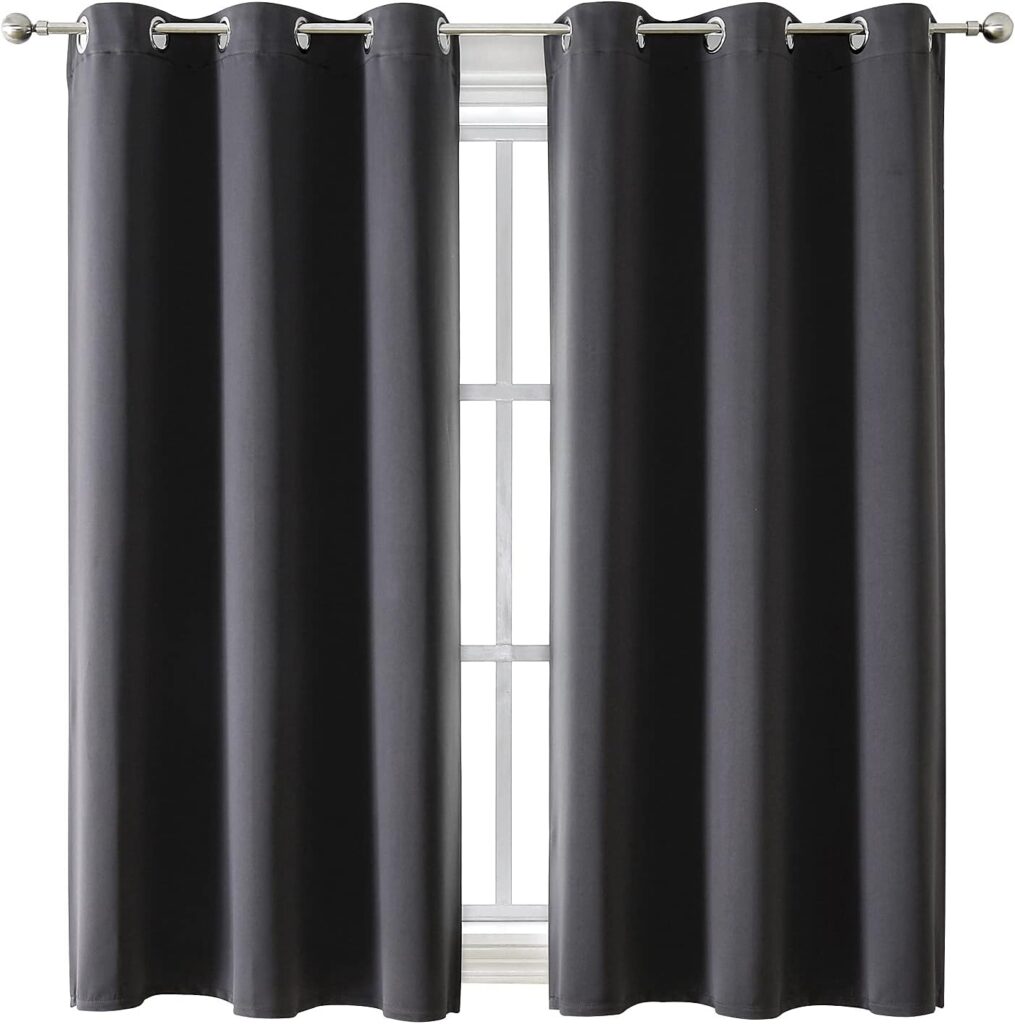
Blackout curtains are one of the best investments I have ever recommended to a client if you live somewhere with streetlights or early sunrises, light is likely disrupting your sleep quality regardless of anxiety. Find good blackout curtains on Amazon here.
6. Try a Body Scan Meditation — Not to Relax, But to Redirect
Here is the distinction that makes body scan meditation actually work for anxious people: do not do it to relax. Do it to give your attention somewhere specific to go.
Anxiety at night is partly a problem of attention your mind is scanning for threats with nothing specific to focus on. A body scan gives it a structured task. Notice your feet. Notice your calves. Notice your knees. You are not trying to feel anything in particular. You are simply giving your restless attention a path to follow that leads away from worry and toward the body.
The Calm app and Headspace both have excellent guided body scans. I have recommended Headspace specifically to dozens of clients and the results are consistently good. Try Headspace here.
7. See a Therapist Who Specialises in Anxiety Especially if This Has Been Going on for Months
Cognitive Behavioural Therapy for Insomnia (CBT-I) is the gold standard treatment for chronic nighttime anxiety and insomnia. It is more effective than sleep medication in the long term, with no side effects and no dependency risk. Research published in the Annals of Internal Medicine found CBT-I outperformed sleep medication in both short term and long term outcomes.
If you have been dealing with nighttime anxiety for more than a few weeks if it is affecting your work, your mood, your relationships, or your ability to function during the day please do not keep managing it alone with breathing exercises and chamomile tea. This is precisely what therapy is for.
The Real Talk: What Doesn’t Work No Matter How Many Pinterest Boards Say It Does {#real talk}
Herbal teas. I am not going to tell you chamomile tea is bad for you. It is a perfectly pleasant beverage. But if you are dealing with clinical anxiety at night, chamomile tea is approximately as useful as a plaster on a broken leg. Do not let it substitute for actual treatment.
Melatonin for anxiety. Melatonin helps with sleep onset particularly for jet lag and shift workers. It does not treat anxiety. If your sleeplessness is driven by anxious thoughts rather than an inability to feel sleepy, melatonin will not address the cause.
Weighted blankets as a cure. I recommended weighted blankets and then walked that back after working with more clients. For some people they genuinely help the deep pressure stimulation can reduce cortisol. For others particularly people with claustrophobia or certain trauma histories they make things significantly worse. Try before you commit to a large purchase.
Meditation apps as a one size fits all solution. Meditation is an extraordinarily powerful tool for anxiety. It is also a skill that takes weeks to develop, and for some people with severe anxiety, unguided meditation initially increases distress before it helps. If you tried meditating and it made things worse, that is not a failure it is information. Work with a therapist to develop a practice that suits your specific anxiety profile.
If your nighttime anxiety is linked to grief, relationship stress, or unprocessed trauma, no sleep technique will resolve it long term. The anxiety is a symptom. The underlying cause needs addressing.
When Nighttime Anxiety Is a Sign of Something More Serious {#serious}
Most nighttime anxiety is manageable with the strategies above. But some patterns warrant professional attention sooner rather than later.
See a doctor or mental health professional promptly if you experience:
- Nighttime anxiety that has persisted for more than 4 weeks and is affecting your daytime functioning
- Panic attacks at night sudden overwhelming terror, racing heart, difficulty breathing, feeling of impending doom
- Consistent early morning waking (3–5am) combined with low mood, loss of appetite, or feelings of hopelessness this pattern is strongly associated with clinical depression
- Nightmares and sleep disturbance following a traumatic event this may indicate PTSD
- Using alcohol or substances consistently to manage sleep this requires specific professional support
If you are recognising signs that your anxiety has tipped into something clinical, please do not wait. Anxiety therapy is one of the most evidence-based and effective areas of mental health treatment available early intervention makes a significant difference.
Books and Tools That My Clients Actually Use {#resources}
These are my genuine recommendations not things that look good in a listicle but things that have made a real difference for real people in my therapy room.
- 📖 The Anxiety and Worry Workbook by Clark & Beck — the most practical CBT-based workbook I know for anxiety. I assign specific chapters to clients between sessions. Evidence-based, clear, and actually usable.
- 📖 Why We Sleep by Matthew Walker — if you want to truly understand what sleep deprivation does to your anxiety (and everything else), this book is essential. One of the most important books I have read in the last five years.
- 📖 Dare: The New Way to End Anxiety by Barry McDonagh — I recommend this to clients who have tried CBT approaches and found them too clinical. Barry’s method is warmer and more practical for nighttime anxiety specifically.
- 📓 The Five Minute Journal — for the “done list” and evening reflection practice I described above. Deceptively simple. Genuinely effective for quieting the mental noise before sleep.
- 🛏️ Blackout Curtains for Bedroom — not glamorous but genuinely one of the most impactful sleep environment changes available. Light disruption is massively underestimated as an anxiety and sleep trigger.
These are Amazon affiliate links. Pragma Counsellors may earn a small commission if you purchase through them, at no extra cost to you. I only recommend products I use or give to my own clients.
Frequently Asked Questions {#faq}
Q: Is nighttime anxiety a disorder? Nighttime anxiety itself is not a diagnosable disorder it is a symptom. It commonly appears alongside Generalised Anxiety Disorder (GAD), insomnia disorder, depression, PTSD, and panic disorder. If your nighttime anxiety is persistent and affecting your daily life, a mental health professional can assess what is driving it and recommend the most appropriate treatment.
Q: Why do I suddenly wake up at 3am feeling anxious? This is one of the most common questions I receive. The 3am wake-up is usually driven by a natural cortisol rise that occurs in the early morning hours to prepare your body for waking. In people with anxiety or depression, this cortisol spike triggers a stress response rather than a gentle transition toward waking. The technique of getting out of bed and doing something calm rather than lying there fighting it is the most effective immediate response.
Q: Can anxiety at night cause physical symptoms? Absolutely. Racing heart, tightness in the chest, shallow breathing, sweating, stomach churning, tingling in the hands these are all physical manifestations of the anxiety response. Your body cannot tell the difference between a real threat and an anxious thought. It responds to both with the same stress physiology. The physical symptoms are real. They are not dangerous. And they respond to the same management techniques as the mental symptoms.
Q: How long does it take for nighttime anxiety to get better? With consistent practice of evidence-based techniques and especially with professional support most people see meaningful improvement within 4–8 weeks. CBT-I specifically has shown significant results within 6 sessions in clinical trials. The key word is consistent. One good night does not mean the work is done. One bad night does not mean the work is not working.
Q: Should I take medication for nighttime anxiety? That is a decision to make with a qualified doctor or psychiatrist not from a blog article. What I can say is that medication can be helpful for some people, particularly in the short term while building longer-term coping skills. It is rarely the only answer, and it works best alongside therapy rather than instead of it. Please consult your doctor rather than self-medicating.
Parting Wisdom
During those three months when I could not sleep without my heart racing, the thing that helped me most was not a technique. It was a shift in my relationship with the sleeplessness itself.
I stopped treating the 3am waking as an enemy to be defeated. I started treating it as information my nervous system’s way of telling me that something in my waking life needed attention. Not at 3am. Not by lying there catastrophising. But in the daylight, with proper support, with honesty about what was actually going on.
The anxiety did not go away because I breathed differently. It went away because I dealt with what was underneath it.
That might be the most important thing I can tell you. The techniques in this article will help you manage the nights. But if there is something underneath the anxiety a relationship, a grief, a fear, a wound that has never been properly tended to the real work is there.
You deserve to sleep. You deserve rest. And you deserve the support to figure out why rest has been so hard to find.
My question for you: What time does your brain typically switch into overdrive at night and what is the thought it always comes back to? You do not have to share anything personal. Just the time and the category of thought. I am genuinely curious and your answer might help someone else feel less alone at 3am.
Drop it in the comments below. I read every single one and respond personally.
Struggling with anxiety that goes beyond nighttime? At Pragma Counsellors we offer professional anxiety therapy individual sessions, fully confidential, with a qualified counselling psychologist.
We offer a free 15-minute consultation. No commitment. No judgment. Just an honest conversation about what you are going through and how we can help.
📍 Muhoho Avenue, South C, Nairobi, Kenya 📞 +254 752 448 315 / +254 784 684 422 📧 contact@pragmacounsellors.com 🌐 Online sessions available for international clients 👉 Book your free consultation here
