

How to Set Boundaries Without Feeling Guilty!:? We’ve all been there. A friend asks for a favor, a colleague drops an urgent request on your desk at 4:55 PM, or a family member demands emotional labor you simply don’t have the capacity to give. Your gut that quiet, honest voice inside screams, “I can’t do this right now.”
But what comes out of your mouth?
“Sure, I can handle that.”
Then, the second you hang up the phone or walk away, the pit in your stomach forms. You feel resentful. You feel drained. You feel guilty for even thinking that you should have said no. If this cycle feels like the soundtrack to your life, please take a deep breath and hear this: You are not a bad person for having limits. In fact, setting boundaries isn’t just a good idea; it’s the most important act of self-preservation you will ever perform.
Introduction: Why Setting Boundaries Feels So Hard
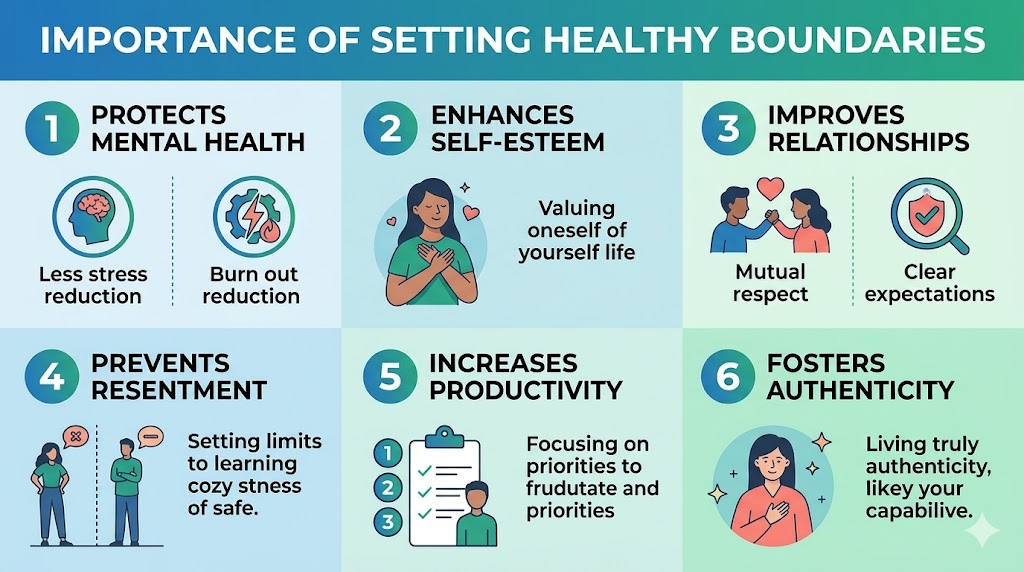
At Pragma Counsellors, we talk to brilliant, kind, and hardworking people every single day who are running on fumes. They aren’t struggling because they are weak; they are struggling because they have become the “do-everything-for-everyone” person.
Setting boundaries feels incredibly hard because, for most of us, we’ve been conditioned to believe that saying “no” is an act of rejection. We worry that if we draw a line in the sand, people will stop liking us, or worse, they’ll realize we aren’t the “super-human” version of ourselves we’ve been projecting.
But here’s the painful truth: when you say “yes” to everyone else, you are effectively saying “no” to yourself. You are saying “no” to your rest, “no” to your mental clarity, and “no” to your own emotional needs. It’s time to flip that script.
What Does It Mean to Set Boundaries?
Think of a boundary not as a brick wall designed to keep people out, but as a garden fence. A fence has a gate. You get to choose who comes in, when they come in, and how long they stay.
Setting boundaries means clearly defining what you are comfortable with and how you want to be treated. It’s an exercise in communication. When you tell a friend, “I love chatting with you, but I’m really tired tonight, let’s talk on the weekend,” you aren’t shutting them out; you are managing the energy you have so that when you do talk, you can actually be present.
Examples of Healthy Boundaries
- The Digital Sunset: Not checking work emails after 7 PM.
- The Emotional Shield: Declining to discuss topics that make you uncomfortable or anxious.
- The Physical Space: Clearly communicating your need for solitude when you’ve had a long day.
- The “No-Explain” Policy: Declining an invitation without providing a ten-paragraph essay justifying why you can’t go.
Why Do I Feel Guilty Setting Boundaries?
Guilt is a strange emotion. We often treat it like a moral compass, assuming that if we feel guilty, we must have done something wrong. But more often than not, guilt is just the growing pain of breaking an old, unhealthy pattern.
If you’ve been the “fixer” or the “people-pleaser” your whole life, setting a boundary feels like breaking a promise. You might struggle with:
- The “Good Person” Myth: The deep-seated belief that your worth is tied to how much you sacrifice for others.
- Fear of Abandonment: The secret, terrifying thought that if you stop being useful, people will stop loving you.
- Cultural Conditioning: Growing up in environments where “selfless” was the highest praise and “self-care” was whispered like a dirty word.
If you’re thinking, “I feel bad saying no,” that isn’t a sign that you’re selfish. It’s a sign that you’re human, and you’re currently unlearning years of conditioning.

The Cost of Not Setting Boundaries
When you constantly bypass your own limits, the cost doesn’t disappear it just accumulates. You might be able to white-knuckle your way through it for a month, maybe a year, but eventually, the debt comes due.
- The Burnout Spiral: Your battery doesn’t just get low; it stops holding a charge altogether.
- Quiet Resentment: You start to feel bitter toward the very people you are helping. You catch yourself thinking, “Why don’t they ever ask how I am?” even though you’ve never given them the chance to see you when you aren’t “fine.”
- The Loss of Self: When you spend all your time catering to the needs of others, you eventually wake up and realize you don’t even know what you want anymore.
How to Set Boundaries Without Feeling Guilty (Step-by-Step)
You don’t need to announce your new boundaries to the world with a manifesto. In fact, it’s better if you don’t. Start small.
1. Start with the “Low-Stakes” Stuff
Don’t start by telling your boss you’re taking all of August off. Start with a friend asking you to watch a movie you don’t want to see. Say no. See what happens. The world won’t end.
2. The Power of the “Brief Pause”
When someone asks for something, you are allowed to say, “Let me check my schedule and get back to you.” This gives you the breathing room to decide if you actually have the capacity, rather than reacting out of reflex.
3. Communicate Clearly, Without Over-Explaining
This is where most people get tripped up. They feel the need to offer a lengthy, overly-detailed excuse. The truth is, the more you explain, the more “room” you give the other person to negotiate. A simple, “I appreciate the invite, but I can’t make it,” is a complete sentence.
4. Stay the Course
The first time you set a boundary, the people in your life might be surprised. They might even get a little pushy. That’s okay. Stay firm. Consistency is what turns a “suggestion” into a “boundary.”

How Counselling Helps You Set Boundaries
Sometimes, setting boundaries feels impossible because the resistance is coming from inside the house. You might know how to say no, but your nervous system is screaming at you to just say yes to keep the peace.
At Pragma Counsellors, we don’t just give you “scripts” to use. We help you explore the root of that guilt. We work together to:
- Unpack your “people-pleasing” origins.
- Develop a stronger sense of self-worth, so that you don’t feel you need to “earn” your place in a relationship.
- Regulate your nervous system, so that when you do set a boundary, you don’t feel like you’re going to panic.
You don’t have to do this alone. Therapy is, in itself, a boundary it’s an hour a week dedicated entirely to you.
Conclusion
Setting boundaries is the bravest thing you can do for your relationships. It sounds counterintuitive, but by showing people where your limits are, you are actually teaching them how to love you better. You are moving from a place of “performative compliance” to a place of “authentic connection.”
You are allowed to have a life that feels like your own. You are allowed to be tired, to be busy, and to prioritize your own peace without needing a permission slip from anyone else.
If you feel like your life is currently overflowing with other people’s agendas, and you can’t quite find your own voice, know that it’s never too late to start drawing those lines. Pragma Counsellors is here to walk that road with you.
Ready to stop feeling guilty and start feeling empowered? [Book a session with us today]—your future, more balanced self is waiting.
Frequently Asked Questions
Q1: Is it selfish to set boundaries? Not at all. Think of it like the oxygen mask rule on an airplane: you have to put yours on first before you can help anyone else. Setting boundaries is how you ensure you have the emotional capacity to be a good partner, friend, and colleague.
Q2: Why do I feel so much guilt when I say no? Usually, it’s a sign that you’ve conflated “being kind” with “being compliant.” You’ve learned that your value is tied to your usefulness. That guilt is simply the fear of losing your “value” if you stop over-extending yourself.
Q3: What if they get angry when I set a boundary? If someone gets angry that you have a limit, that is usually a sign that they were benefiting from you not having one. Those are the people who need your boundaries the most.
Q4: How long does it take to get comfortable setting boundaries? Like any muscle, it gets stronger with practice. The first ten times will feel awkward. The hundredth time? It will feel like breathing. Be patient with yourself.
