

We often talk about love in relationships as a total merging of two lives. But nobody tells us about how to build Healthy Boundaries in Relationships is an important factor too: We are taught that being a “good partner” or a “good friend” means being available at all times, putting the other person’s needs above our own, and never saying “no.” But, if we are honest, this way of loving is a fast track to burnout and resentment.
Setting boundaries is often misunderstood. Many people fear that by setting a limit, they are building a wall. In reality, healthy boundaries are more like a gate: they keep the good in and allow you to protect your peace.
If you struggle with the guilt that comes from asserting your needs, you are not alone. Let us explore how to build these essential structures in your relationships ,without the heavy weight of guilt.
What Are Healthy Boundaries?
Think of a boundary as the imaginary line that defines where you end and another person begins. It is a set of personal rules that govern how you expect to be treated, how much energy you are willing to give, and what behaviors you are comfortable with.
Healthy boundaries aren’t meant to punish or exclude. Instead, they are the framework that makes intimacy possible. When you have clear boundaries, you don’t feel used or drained, which means you have more genuine energy to offer the people you love. Without them, you end up giving from an empty cup, which eventually leads to frustration and distance.
Why Do We Feel Guilty When Setting Boundaries?
Guilt is a powerful, persistent emotion. When you finally decide to say, “I need some time alone” or “I cannot handle this specific conversation right now,” your internal alarm might start ringing. Why does it feel so wrong to do something right for yourself?
- The “Selfish” Misconception: Many of us grew up believing that prioritizing ourselves is inherently selfish. We confuse self-preservation with being unkind.
- Fear of Abandonment: There is a deep-seated fear that if we stop being “agreeable” or “available,” the other person will walk away. We worry that our value lies only in what we can do for others.
- Habitual People-Pleasing: If you have spent years being the “fixer” or the “listener” in your circle, changing the dynamic can feel like you are letting everyone down.
The truth is, guilt is often just “growing pains.” It’s the feeling of breaking an old pattern. It doesn’t mean you are doing something wrong; it just means you are doing something new.

Signs You Need Stronger Boundaries
Sometimes, we don’t even realize we are lacking boundaries until we reach a breaking point. Ask yourself if you recognize any of these patterns:
- You feel resentful. Do you find yourself doing things for others but feeling angry or annoyed while doing them? That is a classic sign that your boundary has been crossed.
- You are exhausted. If you are constantly drained by the needs of your partner, friends, or family, your internal battery is depleted because you aren’t protecting your energy.
- You over-explain. Do you find yourself giving long, detailed excuses every time you say “no”? That’s a sign you feel you need permission to have your own life.
- You lose your identity. When you spend so much time catering to others that you forget what you actually like, want, or need, your boundaries have dissolved.
How to Set Boundaries Without the Guilt
Setting boundaries is a skill, not a personality trait. Like any skill, it takes practice. Here is how you can start.
1. Identify Your Non-Negotiables
You cannot set a boundary if you don’t know what you are protecting. Take some time to sit with yourself and define your values. What matters to you? Your sleep? Your career focus? Your emotional space? When you know your values, your boundaries become a reflection of your character, not a rejection of someone else.
2. Start Small
You don’t need to change your entire life in one day. Start with small, low-stakes situations. If a friend asks for a favour during a busy workday, practice saying, “I can’t right now, but I could look at that this weekend.” Small victories build the “muscle memory” required for bigger, more difficult conversations.
3. Use “I” Statements
When you communicate a boundary, keep the focus on yourself rather than accusing the other person.
- Instead of: “You always call me late at night, and it’s annoying.”
- Try: “I value our conversations, but I need to start winding down by 9:00 PM for my own health, so I won’t be available to chat after that.”
4. Let Go of the Need to Explain
When you say “no,” you do not owe the other person a detailed justification. The more you explain, the more you leave the door open for them to argue your boundary away. A polite, firm “I’m not able to do that” is a complete sentence.
Communicating Boundaries Effectively
Communication is key. You can be kind and firm at the same time. The goal is clarity, not aggression.
Scenario: Your partner is venting to you when you are already mentally drained.
“I really care about what you’re going through and I want to support you. However, I’ve had a really taxing day and I don’t have the mental capacity to give this the attention it deserves right now. Can we talk about this after dinner instead?”
Scenario: A friend expects you to be available for text messages 24/7.
“I love keeping in touch, but I’ve been feeling a bit overwhelmed by my phone lately. If I don’t reply immediately, it’s not personal, I am just taking some time to unplug.”
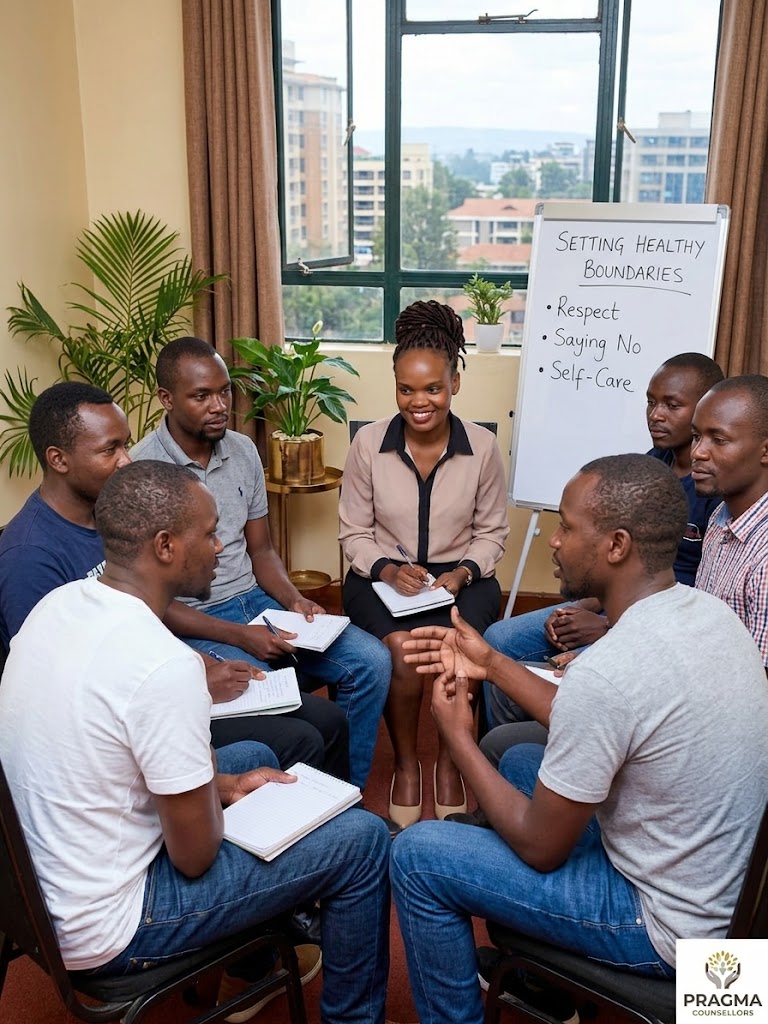
Handling Pushback
Here is the reality: When you start setting boundaries, some people won’t like it. The people who benefit from you having no boundaries will be the most upset when you start implementing them.
If someone pushes back, stay calm. You do not need to defend yourself. You can repeat your boundary with kindness. If they continue to disregard it, that is not a failure on your part, it is simply information about that relationship. It tells you that this person may not respect your needs, and you may need to adjust your level of closeness accordingly.
The Benefits of Healthy Boundaries
When you stick to your boundaries, the magic starts to happen.
- Deepened Respect: People will actually respect you more. When you value your time and energy, others learn to value it, too.
- Authenticity: You stop “performing” for others. The interactions you have become more genuine because you are showing up as your true self, not an exhausted version of yourself.
- Sustainability: You stop resenting the people you love. When you aren’t over-extending yourself, you actually have more joy, patience, and love to give when you do show up.
Conclusion: It’s an Act of Love
Setting boundaries is not about shutting people out; it is about creating a space where healthy connection can survive. By protecting your energy, you are ensuring that your relationships are based on mutual respect and genuine care rather than obligation.
Be patient with yourself as you navigate this. You will feel guilty sometimes, and that is okay. Acknowledge the feeling, breathe through it, and remember why you are doing this. You deserve to live a life that feels authentic, and your relationships deserve a partner who is whole, rested, and present.
CTA: If you find that setting boundaries is consistently triggering anxiety or conflict in your life, you don’t have to figure it out alone. At Pragma Counsellors, we provide a safe, non-judgmental space to help you find your voice and build the relationships you deserve. Book a session today and start protecting your peace.
Frequently Asked Questions about How to build Healthy Boundaries in Relationships
Q1: Is setting boundaries the same as being selfish? Absolutely not. Selfishness is taking from others at their expense. Boundaries are simply stating what you can and cannot do to maintain your own well-being. It is a necessary act of self-care.
Q2: What if I set a boundary and the other person gets angry? Their anger is their reaction, not your responsibility. You can be empathetic toward their feelings without changing your boundary. If they continue to react with hostility, it may be a sign that they are not respecting your needs.
Q3: Does having boundaries mean I am pushing people away? No. In fact, boundaries often bring people closer. When you are no longer resentful or burned out, you are much more pleasant to be around, and your connections with others become deeper and more honest.
Q4: How do I know if my boundaries are too rigid? Boundaries are meant to be healthy, not walls. If you find yourself consistently isolated, unable to be vulnerable, or unwilling to compromise on small things, your boundaries might be too rigid. The goal is a balance between protection and openness.
