
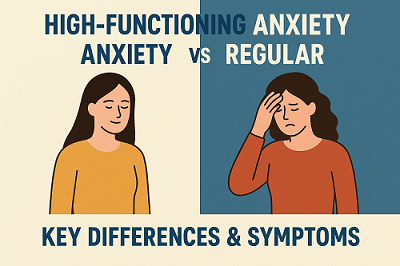
High-Functioning Anxiety and regular anxiety is something most of us experience at some point before an exam, during a job interview, or while waiting for an important call. But for many people, anxiety goes beyond occasional worry. It becomes a constant companion, quietly shaping daily life. While most of us have heard of “anxiety disorders,” there’s another form that often flies under the radar high-functioning anxiety.
At first glance, people with high-functioning anxiety seem to have it all together. They’re organized, ambitious, and reliable. But beneath the calm surface, they’re often battling a whirlwind of worry and self-doubt. So how does this differ from regular anxiety? Let’s unpack the key differences, symptoms, and ways to manage both.
What Is Regular Anxiety?
Regular anxiety sometimes referred to as generalized anxiety disorder (GAD) is a persistent feeling of worry, fear, or unease that can interfere with daily functioning. It’s not just feeling nervous before an event; it’s when the anxiety lingers long after the moment has passed.
People with regular anxiety might experience:
- Difficulty concentrating
- Racing thoughts or constant fear of the worst happening
- Physical symptoms like trembling, fatigue, or nausea
- Sleep problems or irritability
This form of anxiety can make daily life challenging. It’s often visible to others someone may seem restless, distracted, or easily overwhelmed. The key issue is that the anxiety interrupts normal activities, sometimes preventing people from working, studying, or socializing comfortably.
What Is High-Functioning Anxiety?
High-functioning anxiety isn’t an official medical diagnosis, but it’s a term used to describe people who live with anxiety yet continue to function well outwardly. They appear successful, composed, and productive but internally, they’re battling the same fears and worries as anyone with anxiety.
These individuals might be the coworker who always meets deadlines, the student who gets top grades, or the parent who keeps everything perfectly organized. Yet behind closed doors, they may struggle with:
- Perfectionism and fear of failure
- Overthinking even simple tasks
- Difficulty relaxing or being “off duty”
- Constantly feeling “on edge” despite appearing calm
High-functioning anxiety can be hard to spot even for the person experiencing it because it’s often masked by achievement and control.
Key Differences Between High-Functioning Anxiety and Regular Anxiety
Let’s look at how these two types of anxiety differ in important ways:
1. Outward Appearance vs Inner Experience
- Regular anxiety often shows up in visible ways trembling, avoidance, or panic attacks.
- High-functioning anxiety hides behind a mask of productivity. These individuals might look confident but are silently battling tension and fear of disappointing others.
While regular anxiety may stop someone from going to work or school, high-functioning anxiety might drive someone to work even harder to avoid losing control.
2. Motivation and Perfectionism
- People with high-functioning anxiety often use their fear as fuel. Their anxiety pushes them to perform well, meet deadlines, and exceed expectations.
- Those with regular anxiety might find that fear and worry drain their energy, making it hard to focus or complete tasks.
In other words, both feel the same emotions but one overcompensates while the other feels paralyzed.
3. Awareness and Acceptance
- Someone with regular anxiety usually knows something is wrong. They might actively seek therapy or treatment.
- A person with high-functioning anxiety may not realize their anxiety is unhealthy, believing their stress is simply part of being successful.
They might even take pride in being a “worrier,” not recognizing how it’s quietly eroding their peace of mind.
4. Impact on Daily Life
- Regular anxiety can visibly disrupt daily functioning missed work, cancelled plans, or avoidance behaviors.
- High-functioning anxiety allows people to maintain responsibilities but at a cost: chronic exhaustion, burnout, and emotional fatigue.
Over time, that internal pressure can lead to mental burnout, insomnia, or even physical health problems like headaches and muscle tension.
5. Emotional Patterns
- People with regular anxiety may experience panic attacks or overwhelming fear without clear triggers.
- Those with high-functioning anxiety tend to live in a state of “constant low-grade worry.” They rarely panic, but they’re always tense.
Their thoughts sound like:
“If I stop working, I’ll fall behind.”
“Everyone expects me to do well.”
“What if I make a mistake?”
This constant self-pressure can feel just as heavy as panic attacks only more hidden.
Symptoms of High-Functioning Anxiety
Because high-functioning anxiety is often invisible, it helps to know what to look for. Here are common symptoms:
- Overthinking every decision
- Difficulty relaxing, even during downtime
- Feeling restless or tense most of the time
- Insomnia or trouble falling asleep
- Excessive planning and list-making
- Fear of failure or disappointing others
- Physical tension (jaw clenching, headaches, stomach aches)
- Being overly critical of oneself
You might notice that many of these traits overlap with “being hardworking.” But the difference lies in motivation high-functioning anxiety is driven by fear, not just ambition.
Symptoms of Regular Anxiety
Regular anxiety tends to have both emotional and physical symptoms that are more pronounced:
- Frequent feelings of panic or dread
- Racing heart, sweating, or trembling
- Avoidance of social or stressful situations
- Constant fatigue
- Trouble focusing or remembering things
- Irritability and restlessness
- Feeling detached or “out of control”
Unlike high-functioning anxiety, these symptoms often disrupt normal life and may require professional treatment.
How Both Types of Anxiety Affect Daily Life
Whether visible or hidden, both forms of anxiety can deeply affect relationships, work, and health.
- At work or school:
Someone with high-functioning anxiety might overcommit, taking on too many tasks, while someone with regular anxiety may avoid them altogether. - In relationships:
People with high-functioning anxiety may appear supportive but struggle to express vulnerability. Those with regular anxiety may withdraw when feeling overwhelmed. - Physically:
Chronic stress hormones affect sleep, digestion, and energy levels eventually leading to burnout if not addressed.
The truth is, neither form of anxiety should be dismissed. Both deserve understanding and support.
How to Cope With High-Functioning Anxiety
If you identify with the traits of high-functioning anxiety, know that you’re not alone and it’s not a sign of weakness. There are simple, effective steps you can take to feel more balanced:
- Acknowledge It
The first step is recognizing that anxiety doesn’t have to be your “normal.” You don’t have to keep pushing through silently. - Set Boundaries
Learn to say no. Overcommitment fuels anxiety and exhaustion. Protect your time and energy. - Practice Mindfulness
Deep breathing, yoga, or journaling can help calm racing thoughts. Even 10 minutes of quiet can reset your mind. - Limit Perfectionism
Aim for progress, not perfection. Remember, mistakes are part of growth. - Seek Professional Help
Therapy or counseling can be incredibly helpful. Cognitive behavioral therapy (CBT) is especially effective for managing anxious thoughts. - Take Breaks
Give yourself permission to rest. Productivity doesn’t define your worth.
How to Manage Regular Anxiety
For those experiencing more traditional anxiety symptoms, professional help and lifestyle changes can make a huge difference:
- Therapy and Counseling
Working with a licensed therapist can help you identify triggers and develop coping strategies. - Medication (When Needed)
Some people benefit from anti-anxiety medication or antidepressants prescribed by a professional. - Lifestyle Changes
Regular exercise, balanced nutrition, and sufficient sleep can help regulate mood and stress levels. - Mindfulness and Relaxation
Meditation, prayer, or breathing exercises can reduce anxiety over time. - Community and Support
Talk to someone you trust whether a friend, family member, or support group. You’re never alone in this journey.
When to Seek Help
If your anxiety high-functioning or regular feels unmanageable, interferes with sleep, or causes physical symptoms, it’s important to reach out for help. Mental health professionals can provide guidance, treatment, and tools to help you manage it effectively.
There’s no shame in seeking support. In fact, reaching out is one of the strongest and most self-aware things you can do.
Final Thoughts
The biggest difference between high-functioning anxiety and regular anxiety is visibility one hides behind success, while the other is more openly disruptive. Yet both are equally real and deserve compassion and care.
Whether your anxiety makes you overachieve or withdraw, remember this: your mental health matters more than your productivity or image. Seeking help doesn’t mean you’ve failed it means you’re ready to live with more peace and balance.
With the right understanding, tools, and support, anxiety doesn’t have to define your life. You can learn to manage it, heal from it, and even grow stronger through it.
