
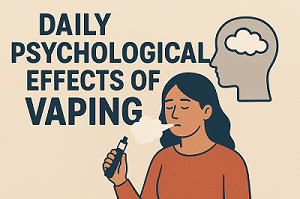
Daily psychological effects of vaping, is referring to how regular use of vape devices influences the mind and behavior over time not only during the immediate session, but in patterns of mood, attention, stress regulation, identity, and relationships. The concept sits at the intersection of vaping behavior, vape addiction, and vaping in psychology.
For instance, many people who vape report that they reach for the device when feeling stressed or anxious. Research has shown that among young adults, higher stress, anxiety or depression levels are associated with vaping for tension reduction or relaxation. That is one example of how daily psychological effects of vaping manifest: a cycle of using vaping to relieve immediate discomfort, which may inadvertently reinforce the habit and complicate mental health.
Understanding vaping in psychology means recognizing that the behavior is not just about nicotine or flavor, but also about how the individual uses the behavior in their emotional landscape: for coping, identity, social belonging, distraction, or ritual. The pattern of daily psychological effects of vaping asks: how does vaping fit into your day, your emotions, your relationships? That becomes the frame for deeper insight.
Why people vape: psychological motivation
Exploring the motivations behind vaping helps uncover the roots of the habit beyond the physical nicotine addiction. Several psychological drivers show up consistently in research on vaping in psychology.
Stress relief and self-medication
As mentioned, studies show that young adults with higher stress levels are more likely to vape for relief or relaxation. From the perspective of daily psychological effects of vaping, this means vaping becomes a go-to tool for managing uncomfortable emotions. Over time, the brain learns to associate “vapour in hand” with “temporary relief” and the habit strengthens.
Personality traits and coping styles
Research into personality risk factors for vape use finds that individuals who vape may score lower on mindfulness, higher on rumination, lower on self-compassion, tend toward evening-chronotypes, and report poorer sleep quality. That suggests vaping is more likely among those with less adaptive coping styles, or those whose emotional and behavioral regulation is more challenged. In terms of daily psychological effects of vaping, the device may fill a gap where other strategies are absent.
Social, identity and behavioural patterns
The habit often embeds itself in social contexts. Peer networks are important: for adolescent vaping especially, research shows that those who vape are more often in tightly-knit friend groups with other vapers. The act of vaping can become part of identity “I’m a vaper”, “we vape together”, “this is how we relax” and that influences how the habit plays out daily (daily psychological effects of vaping). The visual, behavioral ritual of inhaling, exhaling vapor, social sharing all strengthen the psychological element.
Perceived harm-reduction and gateway potential
Some adult users take up vaping believing it is less harmful than smoking, or as an alternative. But from a psychological standpoint, this creates a paradox: vaping may carry its own risk of dependence, and may heighten cues or triggers that promote smoking relapse. For instance, exposure to others vaping increases craving for smoking in young adults. Thus the daily psychological effects of vaping include how these perceptions and myths shape behavior and expectations.
What does the research say about vaping in psychology and mental health
The science around vaping in psychology is still evolving, but several lines of research speak to the concept of daily psychological effects of vaping.
Association with anxiety and depression
One qualitative study among college students found that vaping, anxiety-laden college life, and vape culture formed a “perfect storm” that maintained the behaviour. Themes included “trapped in that cycle”. In other words, the daily psychological effects of vaping include reinforcing anxiety via the mechanism of inhaling and quitting/restarting. Another study found that young adults who vape and have higher stress and depression are more likely to vape for relaxation or tension reduction.
Sleep, rumination, and self-regulation effects
The personality-trait study found vape users had poorer sleep quality, more rumination (repetitive negative thinking), lower self-compassion and mindfulness. These findings imply that daily psychological effects of vaping extend into domains of cognitive functioning, emotional regulation, and wellbeing beyond the act of vaping. Poor sleep can amplify these patterns and lead to further reliance on the device for “help”.
Social network and behavioral contagion
Research into adolescent networks found that vaping status is associated with closer peer networks of other users. Behaviorally, this suggests that daily psychological effects of vaping include not just individual mental health, but relational and social reinforcement of the habit. If everyone around you vapes, the cues, environment and social rewards support it.
Dual-use and broader behavioural risk
Studies comparing users who vape nicotine, cannabis, or both found differences in perceptions and dependence. Also, research shows early initiation of vaping is associated with family structure variables such as parental divorce. These indicate that daily psychological effects of vaping link to broader risk behaviors and life context.
Health message resistance under stress
A study found that individuals with higher stress levels evaluated health-warning messages about vaping more negatively, and had lower intentions to abstain. This suggests that the daily psychological effects of vaping include how messaging, behaviour change, and motivation interact when someone is already under stress, they may lean more heavily into the habit and resist outside messages.
Why the phrase “daily psychological effects of vaping” matters for thinking about behaviour change
Using the phrase daily psychological effects of vaping focuses attention on how vaping is embedded in everyday life, not just as a momentary behaviour but as part of an emotional and cognitive cycle. It helps shift our understanding from “do you vape?” to “how does vaping fit into your feelings, your day-to-day, your identity?” With that lens we see:
- Triggers: times of stress, boredom, social interaction, peer cues, habit loops.
- Reinforcers: relief, distraction, sensory satisfaction, social connection short term.
- Consequences: mood dips after nicotine levels drop, guilt or anxiety about vaping, sleep disruption, heightened cravings, tobacco relapse risk, cognitive effects.
- Identity and routine: “I’m the person who vapours when…”, “We take breaks to vape”, “I need the device when I feel…”.
By attending to these daily psychological effects of vaping we can unpack the habit in more human terms. That is key for clinicians, educators, support groups, and individuals themselves who want to understand why vaping is more than just nicotine delivery.
Implications for mental health, counselling and behaviour change
Given what we know about vaping in psychology and daily psychological effects of vaping, what are some practical implications?
Assessment and awareness
For anyone working with a client who vapes, asking questions that capture daily psychological effects of vaping is helpful: when do you vape? what emotion or situation triggers it? how do you feel before/after? what alternatives do you have? Reviewing peer influence and identity factors is crucial.
Coping strategy development
Because vaping often serves as a coping mechanism (relief from stress, boredom, social anxiety), work on expanding and strengthening healthier coping is essential. Mindfulness, self-compassion work, emotional regulation skills, sleep hygiene, rumination-reduction strategies can be helpful especially given the links found in research.
Environment and social context
Addressing the way social networks, identity and peer behaviours reinforce vaping is important. Discussions around daily psychological effects of vaping should explore who the person vapes with, what the social meaning of vaping is, how the device fits into their identity and daily rhythm. Interventions might target peer-group change, alternative social rituals, or de-linking vaping from identity.
Behavior change, messaging and relapse risk
Because people under stress may resist health messaging and face stronger cues to vape, daily psychological effects of vaping need addressing in the treatment plan: reduce exposure to cues, build alternative rituals, monitor stress reactivity.
Prevention and early intervention
Given that early vaping is associated with family structure, peer network influences, and may lead to other risk behaviors, prevention efforts need to frame the daily psychological effects of vaping for adolescents: how peer pressures, identity, stress, boredom intersect.
Support for quitting
When a person wants to stop vaping, understanding their daily psychological effects of vaping is key: what supports maintain the behaviour, what emotions drive it, what functions does it serve for them? Quitting isn’t only about willpower; it’s about rewiring daily routines, relationships, coping habits and identity.
Limitations and caveats
It’s important to recognize that while the phrase daily psychological effects of vaping helps frame the topic, the research base remains emerging. Many studies are cross-sectional (snapshots in time) and can’t definitively say vaping causes the mental-health problems or sleep issues. For example, a study found associations between vaping and anxiety but cannot firmly establish causation. Also, different devices, nicotine levels, flavoring and patterns of use mean the psychological effects may vary widely. The phrase daily psychological effects of vaping invites nuance, not sweeping generalizations.
Another caveat: some individuals use vaping as a harm-reduction substitute for smoking, and the psychological dynamics there may differ from non-smokers who begin vaping. The daily psychological effects of vaping will differ in a person using it to quit smoking versus someone using it recreationally or socially.
Finally, cultural, regulatory, marketing and product variation influence how people interact with vaping. The psychological context in one region or age-group may not exactly map onto another.
Looking ahead: what we still need to learn
The study of vaping in psychology and specifically the daily psychological effects of vaping has several promising areas for further research:
- Longitudinal studies that follow individuals over time to map how vaping behaviour and psychological patterns interact and possibly evolve into dependence or change.
- Intervention studies which explicitly address daily psychological effects of vaping (coping, identity, social network) and test their effectiveness in cessation or reduction.
- More fine-grained work on device types, nicotine dosage, flavouring and how these variables influence psychological dynamics including mood, attention, sleep, rumination.
- Research on vaping in under-researched populations (regions of Africa, Asia, low-income countries) which may show different social and psychological patterns.
- Studies investigating how to reshape the daily psychological effects of vaping: what alternatives, rituals, social supports can replace the device in the rhythm of someone’s day.
Practical tips for individuals considering their daily psychological effects of vaping
If you’re reading this and wondering how the phrasIf you’re reading this and wondering how the phrase daily psychological effects of vaping applies to you or someone you know, here are some reflective and actionable steps:
- Track your pattern: For a week, note when you vape, what emotion or situation preceded it, how you felt afterwards. This gives insight into the psychological triggers.
- Question the function: Ask yourself: “What was I trying to achieve by vaping right now?” Was it stress relief, boredom relief, social belonging, distraction, habit?
- Explore alternatives: For each function you identify, brainstorm healthier alternatives. If it’s stress relief, maybe breathing exercises; if it’s social, maybe a short walk with friends; if it’s ritual, maybe a favourite tea instead.
- Modify cues and environment: If certain places, times of day, friends, or devices trigger you automatically, restructure them. Don’t carry the device to bed if you vape then; avoid places where you always vape out of habit.
- Strengthen mental habits: Because research links lower mindfulness, higher rumination and poorer sleep to vaping, work on those. Short mindfulness breaks, journal for rumination, improve sleep hygiene.
- Seek social and professional support: Whether you join a group, talk to a counsellor, or share with a friend, acknowledging the psychological side helps. If you feel trapped or notice anxiety, depression or sleep worsening, a professional can help map the interaction between vaping and mental health.
- Be patient and compassionate: Changing the daily psychological effects of vaping doesn’t mean sudden willpower. It means rewiring routines, coping styles, social habits — that takes time and kindness toward oneself.
FAQ
Q: Does vaping always lead to mental health problems?
A: No. Vaping is associated with higher rates of anxiety, depression, poor sleep and rumination in research, but it does not inevitably lead to mental health issues. The relationship is complex and influenced by personality, coping, social context, device type, frequency, and more. (See studies on stress and vaping in youth)
Q: Can someone who vapes quit and reduce the daily psychological effects of vaping?
A: Yes. Understanding the role vaping plays in your daily emotional life is a first step. With better coping skills, changing routines, managing triggers and possibly professional support, one can change how vaping functions in one’s life. The term daily psychological effects of vaping helps to frame this change.
Q: Is vaping less harmful than smoking from a psychological standpoint too?
A: Possibly in some cases (e.g., former smokers using vaping to stop smoking), but from a psychological standpoint the habit still carries risk of reinforcement, cue-dependence, anxiety around nicotine withdrawal, sleep disruption, and social identity that can maintain the behaviour. So the daily psychological effects of vaping remain relevant whether one is switching from smoking or starting fresh.
Q: How do I know if vaping is linked to my sleep problems, mood dips or concentration issues?
A: You might notice that you vape more when stressed, you find it harder to sleep on days you vape late, you have cravings when you’re bored or anxious, or your mood drops after nicotine wears off. Tracking these patterns e.g., “days I vape vs days I don’t” and noting how your mood, sleep and concentration compare can highlight the daily psychological effects of vaping in your life.
Q: Where can someone get help if they feel their vaping is controlling their life?
A: A good first step is talking to a mental health professional or addiction specialist who recognizes how behavior and mind intertwine. Support groups, smoking-cessation programs that include vaping, and therapists who understand behavioral habits can help address the daily psychological effects of vaping the emotional, cognitive and social aspects not just the nicotine withdrawal.
Conclusion
Understanding vaping in psychology and especially the concept of daily psychological effects of vaping gives a richer, more human lens on what might otherwise appear as a purely physical or habit-based issue. The device, the rituals, the social scene, the emotional triggers, the coping styles: these all converge to shape how someone uses vaping and how it affects their life day-to-day.
Whether you’re someone who vapes and wants to understand why, a counsellor supporting a client, or a loved one wondering how to help, focusing on the psychological side of vaping how it fits in your day, your identity, your mind offers pathways toward change. It’s not about blame. It’s about clarity. It’s about noticing what the habit means, what it does, and what you might do differently.
If you found this helpful and would like a downloadable self-reflection worksheet on daily psychological effects of vaping, let me know and I’ll prepare one for you.
